
3/25/2026
Building Skills That Matter: Dr. Cheryl Chase Visits The Walker School
|
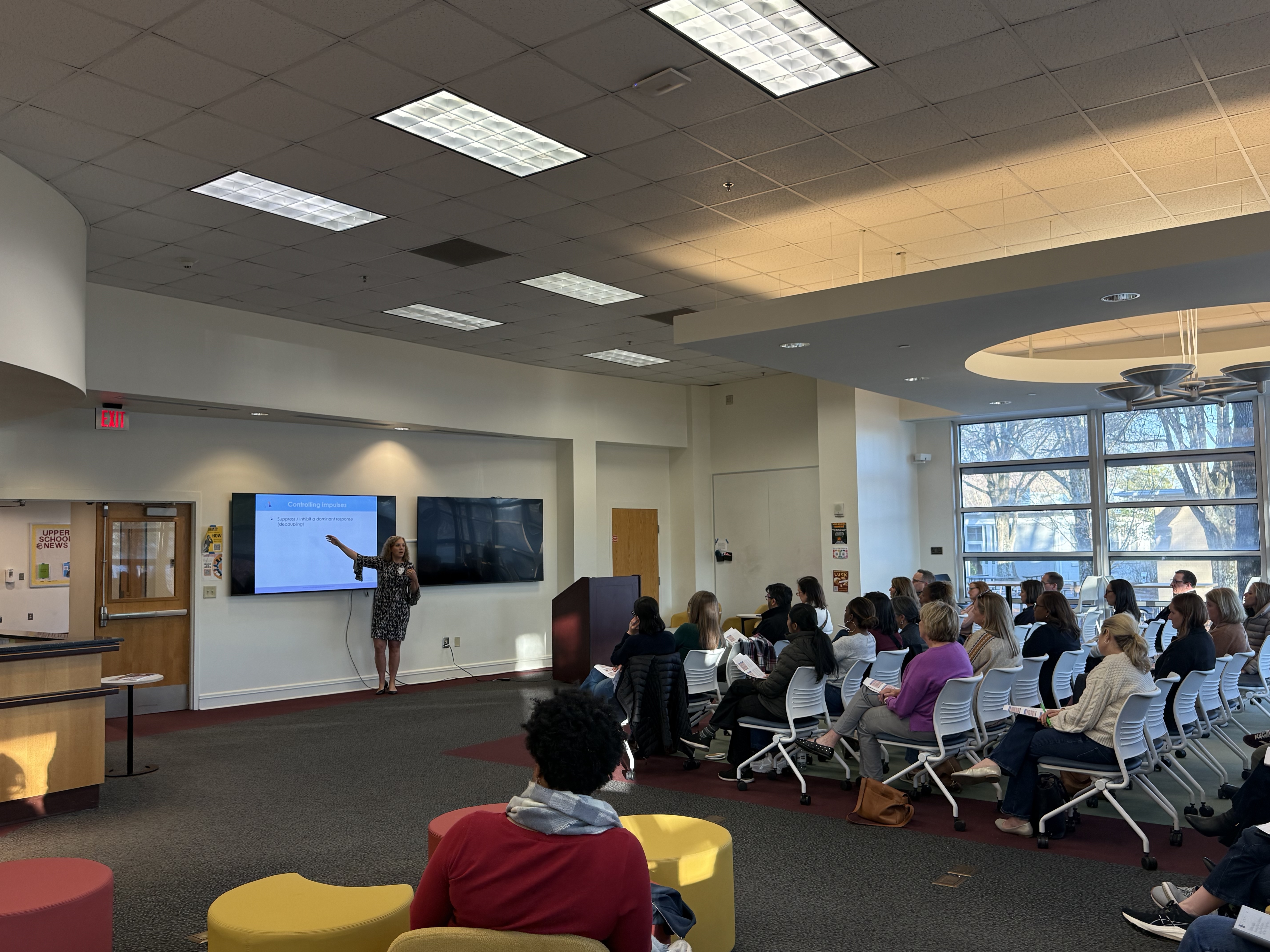
The Walker School recently welcomed clinical psychologist Dr. Cheryl Chase to campus for a full day of conversations with faculty and families focused on helping students build the skills they need to succeed in school and beyond. Dr. Chase, who works with schools and families nationwide, led multiple sessions throughout the day centered on executive functioning, the mental processes that help students manage time, stay organized, regulate emotions and follow through on tasks. She described these skills as the brain’s “air traffic control system,” guiding how students focus, plan and respond to challenges. During parent and faculty sessions, Dr. Chase shared practical, research-informed strategies that can be used both in the classroom and at home. A key takeaway was that what can look like lack of motivation is often cognitive overload, particularly challenges with working memory. When students are asked to manage too much at once, even highly capable students, particularly those with executive functioning challenges such as ADHD, can struggle to get started or follow through. To support students more effectively, Dr. Chase encouraged families and educators to simplify and structure tasks. Breaking large assignments into smaller, manageable steps, providing clear directions one at a time and making expectations visible through checklists or routines can significantly reduce stress and improve follow-through. She also emphasized the importance of “externalizing” information, getting key steps and reminders out of a child’s head and into their environment, as a powerful way to build independence over time. She also noted that students often need more support in situations that require independence without structure and that adjusting the environment can be more effective than repeating directions. Providing immediate feedback, creating opportunities for small successes and reinforcing positive habits in the moment can help students stay engaged and motivated. Dr. Chase emphasized that executive functioning skills develop gradually, often into early adulthood, and are influenced by factors such as sleep, nutrition and overall well-being. With consistent support and realistic expectations, students can continue to build these skills over time. The visit reflects Walker’s ongoing commitment to supporting the whole child, equipping students not only with strong academic foundations but also with the habits and skills that foster independence, confidence and long-term success. |
|
EXPLORE MORE
HEADLINES

Walker’s Tulowitzky Named Region Athletic Director of the Year

Walker School Alum Harrison Awarded Fulbright to Teach in Spain